
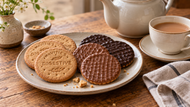
What Are Digestive Biscuits? Why They’re Called Digestives and How They Taste
Posted by Cindy Washburn on Sep 8th 2026
“Digestive biscuit” sounds more like something prescribed by a Victorian doctor than something you would willingly dunk into a cup of tea. Fortunately, the reality is much more appealing.
Digestive biscuits are lightly sweet, crumbly wheat biscuits commonly eaten in Britain and Ireland. Despite their clinical-sounding name, they are not medicine and will not settle your stomach after an ambitious dinner. They are simply a familiar everyday treat, frequently enjoyed with tea or coffee.
Americans would generally consider them a type of cookie, although they are less sweet and more substantial than most American cookies. Their toasted wheat flavor and firm, crumbly texture place them somewhere between a cookie and a cracker.
That may not sound especially exciting, but digestives have remained popular for generations for precisely that reason: they are simple, satisfying and sweet without trying too hard.
What Is a Digestive Biscuit?
A digestive biscuit is a round, semi-sweet wheat biscuit with a golden-brown color and a coarse, crumbly texture. It has a mildly sweet, toasted flavor and enough structure to survive a quick dip into a hot drink.
The word “biscuit” can cause some confusion for American readers. In Britain and Ireland, it generally refers to the kind of crisp, sweet baked treat Americans would call a cookie. It does not refer to the soft, buttery bread commonly served with breakfast in the United States.
Recipes differ between manufacturers, but digestives usually contain wheat flour, whole-wheat flour, sugar, vegetable oil or another fat, raising agents and salt. Some traditional recipes also include malt extract. The whole wheat contributes to their slightly nutty flavor and characteristic coarse texture.
Digestives are not as sugary as sandwich cookies or chocolate chip cookies. Instead, the sweetness sits quietly behind the toasted wheat flavor. That balance makes them equally comfortable beside a mug of tea, beneath a slice of cheese or crushed into the bottom of a cheesecake.
If an American cookie is often a dessert, a digestive is more like company for your tea.
Why Are They Called “Digestive” Biscuits?
Digestive biscuits originated in Scotland in 1839, when two doctors developed a semi-sweet wheat biscuit they believed could aid digestion.
The name came primarily from sodium bicarbonate, or baking soda, which was thought to have antacid properties. Some early recipes also used malt extract, another ingredient associated at the time with digestion and nutritional value.
McVitie’s began manufacturing its own Digestive in 1892 using a recipe developed by Alexander Grant. It went on to become the best-selling biscuit in the United Kingdom and one of the most recognizable products in British grocery stores.
McVitie’s introduced its chocolate-coated Digestive in 1925, proving that even a supposed Victorian health biscuit could eventually find itself covered in chocolate.
Modern digestive biscuits should be treated as ordinary biscuits rather than medicine. Nutritional science has moved on, but the name has stubbornly remained.
What Do Digestive Biscuits Taste Like?
A plain digestive tastes like toasted, lightly sweetened wheat with a subtle hint of salt. Its flavor comes primarily from the grain rather than strong vanilla, spices or large amounts of sugar.
The texture is equally important. Digestives are:
- Crumbly without being especially delicate
- Thicker and more substantial than many crackers
- Less sugary than most American cookies
- Slightly coarse because of the whole-wheat flour
- Firm enough for a quick dunk in tea or coffee
Plain digestives have a deliberately restrained sweetness. Chocolate-coated versions add a richer, creamier layer, but the wheaty biscuit underneath remains an important part of the flavor.
Calling them bland misses the point. A digestive is not trying to overwhelm you with sugar. Its appeal lies in being balanced enough that you can enjoy one with tea and then, quite accidentally, discover that three more have disappeared.
Digestive Biscuits vs. Graham Crackers
Digestive biscuits and graham crackers are often compared because both are made with wheat, are only moderately sweet and can be crushed for dessert bases. They are similar enough to substitute for one another in some recipes, but they are not the same thing.
| Feature | Digestive Biscuits | Graham Crackers |
|---|---|---|
| Texture | Thicker, denser, and more crumbly | Thinner, lighter, and crisper |
| Flavor | Toasted, wheaty, and lightly sweet | Sweeter, often with honey or cinnamon |
| Typical use | Tea biscuit, snack, cheese pairing, or dessert base | Snack, s’mores, pie crusts, or dessert base |
| Shape | Usually round | Usually rectangular |
| Chocolate version | Commonly coated on one side | Usually paired with separate chocolate |
A digestive usually has a richer wheat flavor and a more substantial bite. Graham crackers tend to be sweeter and may have noticeable honey, vanilla or cinnamon flavors.
Crushed digestives can replace graham crackers in many cheesecake and pie crusts. The finished crust will generally be a little less sweet, which can work particularly well with rich fillings.
Plain, Milk Chocolate or Dark Chocolate?
McVitie’s Digestives are commonly available in three principal varieties: Original, Milk Chocolate and Dark Chocolate. Each begins with the familiar wheat biscuit but offers a different balance of sweetness and richness.
Original Digestives
Original McVitie’s Digestives provide the most traditional experience.
- The least sweet of the three varieties
- The strongest toasted wheat flavor
- Well suited to dunking in tea or coffee
- Suitable for pairing with cheese
- A versatile choice for cheesecake and dessert bases
Choose Original if you want to discover what a classic digestive tastes like before introducing chocolate into the situation.
Milk Chocolate Digestives
McVitie’s Milk Chocolate Digestives have a smooth milk chocolate coating on one side.
- Sweeter and creamier than Original
- Familiar and approachable for American chocolate lovers
- Balanced by the lightly salty wheat biscuit underneath
- Particularly enjoyable with tea or coffee
Choose Milk Chocolate if you want something closer to a dessert cookie while retaining the distinctive texture and flavor of a digestive.
Dark Chocolate Digestives
McVitie’s Dark Chocolate Digestives pair the traditional wheat biscuit with a layer of dark chocolate.
- Richer and less sweet than the milk chocolate version
- A deeper cocoa flavor
- A noticeable contrast between the chocolate and toasted wheat
- Well matched with robust black tea or dark-roast coffee
Choose Dark Chocolate if you enjoy chocolate but prefer a slightly less sweet, more intense flavor.
How Are Digestive Biscuits Traditionally Eaten?
Digestives are versatile enough to move from the biscuit tin to the cheeseboard and then into the dessert pan.
With Tea or Coffee
The classic approach is to serve digestives alongside a hot drink. Some people eat them dry, while others briefly dip the edge into tea or coffee.
The important word is “briefly.” A digestive is sturdy, but it is not invincible. Leave it submerged too long and your afternoon snack becomes sediment at the bottom of the cup.
With Cheese
Plain digestives pair surprisingly well with sharp cheddar, blue cheese and other strongly flavored cheeses. Their subtle sweetness and toasted wheat flavor provide a pleasant contrast to salty or tangy cheese.
Although chocolate digestives have many admirers, they are probably best left off the cheeseboard.
In Cheesecake Crusts
British and Irish recipes frequently use crushed digestive biscuits mixed with melted butter as the base for cheesecakes and other chilled desserts. They serve much the same purpose as graham crackers in American recipes.
Their restrained sweetness makes them particularly useful beneath rich cheesecake fillings.
In No-Bake Desserts
Digestives also appear in chocolate biscuit cake, tiffin, banoffee pie and other no-bake desserts. They absorb surrounding flavors while retaining enough structure to keep the finished dessert from becoming a shapeless mass.
Directly From the Package
No ceremony is required. Digestives are most often eaten as they were intended: as a simple everyday biscuit when you want something sweet, but not excessively sweet.
Tea is optional, although strongly encouraged.
Not sure which tea to serve? Explore the differences between Irish and English tea and choose the style that best suits your taste.
Are Digestive Biscuits Healthy?
Despite their name and history, digestive biscuits are treats rather than medicinal or specialized health foods.
Plain digestives contain whole-wheat flour, but they also contain sugar and fat. Chocolate-coated varieties generally contain more sugar and calories than the original version. Recipes, package sizes and nutritional profiles vary between manufacturers.
Anyone concerned about calories, sugar, fiber, allergens or dietary restrictions should check the current information printed on the individual package. Digestives should not be expected to treat indigestion or provide a meaningful antacid effect.
Their name is a piece of food history, not a health promise.
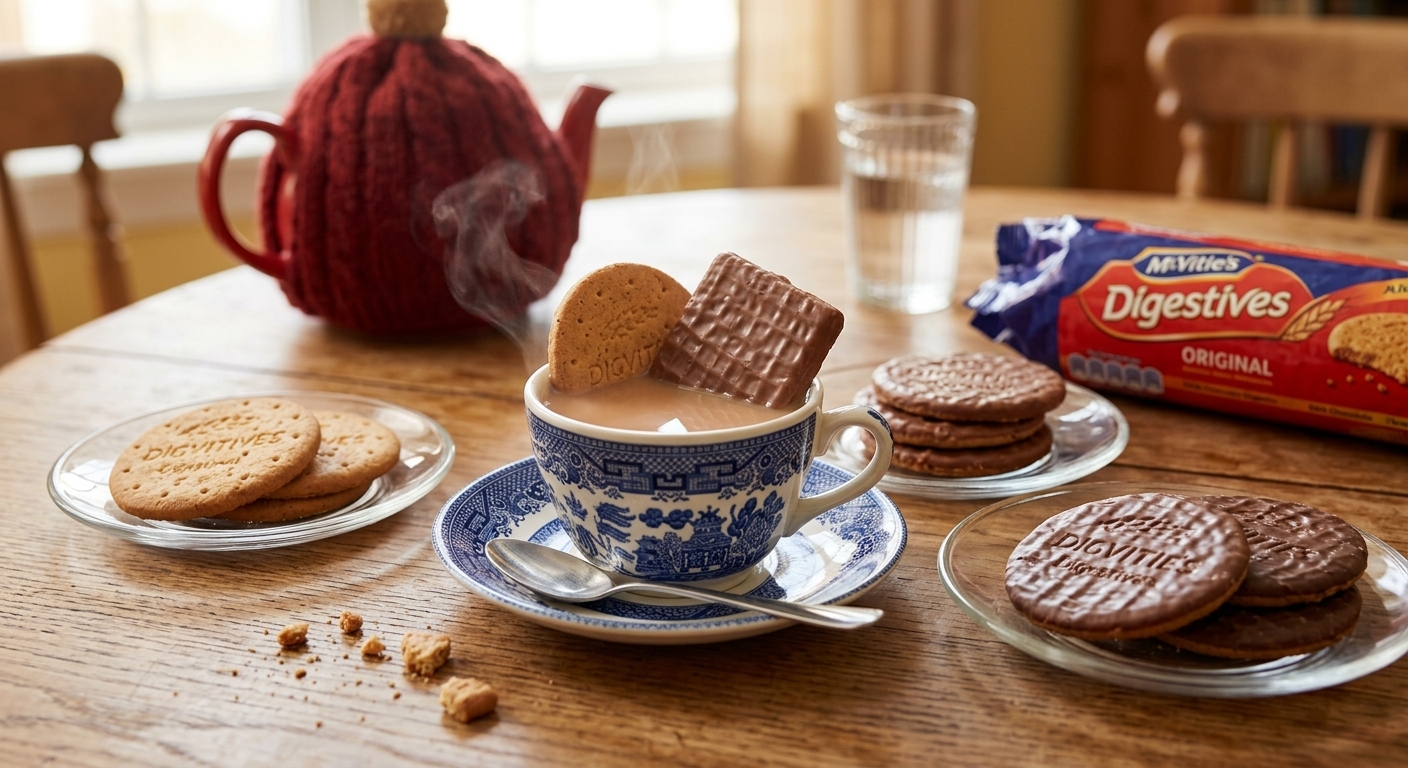
Which Digestive Biscuit Should You Try First?
The best choice depends on what you normally enjoy:
- Choose Original for the classic, least-sweet digestive experience, a cheese pairing or a versatile baking biscuit.
- Choose Milk Chocolate if you prefer creamy chocolate and a sweeter snack.
- Choose Dark Chocolate if you enjoy richer cocoa flavor with less sweetness.
- Try all three if choosing only one sounds unnecessarily restrictive.
The Original provides the clearest introduction to the traditional digestive biscuit. The chocolate varieties explain why people who planned to eat only one frequently reconsider.
Find British Digestive Biscuits at Oxford Hall
Oxford Hall carries imported British and Irish foods, including Original, Milk Chocolate and Dark Chocolate McVitie’s Digestives.
Shop the individual varieties:
- Original McVitie’s Digestives
- McVitie’s Milk Chocolate Digestives
- McVitie’s Dark Chocolate Digestives
You can also browse Oxford Hall’s complete selection of British and Irish biscuits and cakes.
If you are near New Cumberland, Pennsylvania, visit Oxford Hall to explore the grocery shelves in person. Availability can change, so check online or contact the shop if you are looking for a specific variety.